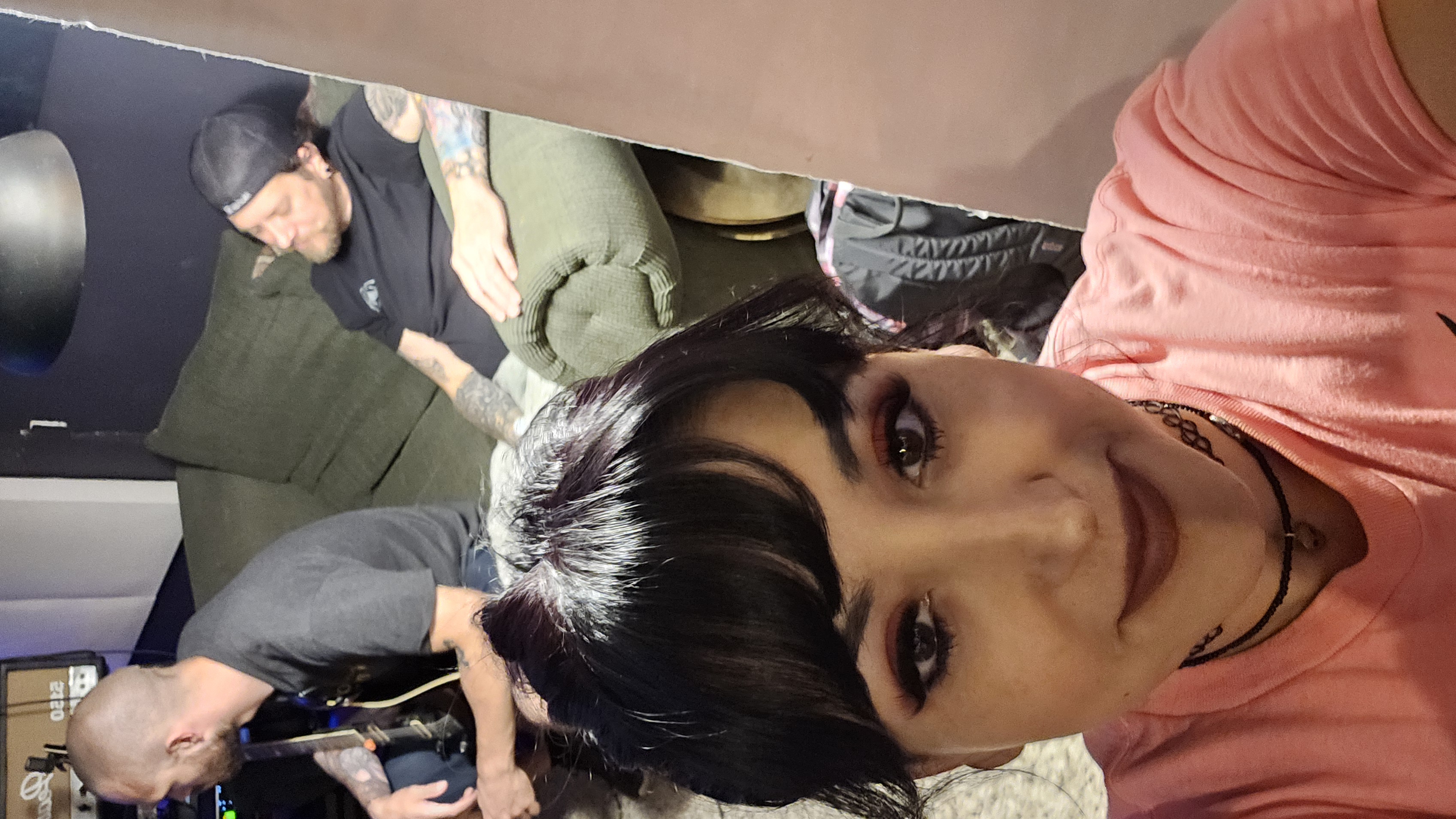
Photos and Article by: Ashley Parrish
I’ve been a DIY music journalist since January 20, 2024, at approximately 9:38 pm. That night, Draghoria was headlining their sold-out album release show for Asunder at the Moxi Theater in Greeley. Human Paint and Bleed the Vain had just played explosive sets, and Dystopioid was about to go on. I was stuck behind the merch table (which I had volunteered to do), quickly realizing that I hated being confined to one spot, unable to move around the venue—I wanted to be a part of it all—but I was terrible at slinging merch.
Then, mid-show, Amy, boss lady and founder of Resident Rockstar Magazine, asked if I wanted to write about the event. She didn’t have to ask twice—I was suddenly everywhere, notebook in hand, jotting down every minute detail as a blow-up doll named Svetlana glided atop the crowd. By the end of the night, I was filled with notes and nervous anticipation about writing my first article. I didn’t know it at the time, but my entire world had just shifted. My passion for concerts and music had found a new focus—writing about them—and I’ve been fueled by that passion ever since.
In the past nine months, I’ve immersed myself in the world of live music, learning to notice the nuances of performances—the lighting, sound quality, and the remarkable exchange of energy between the stage and the crowd. I’ve stood off to the side, witnessing how movement on stage creates movement in the audience, and how music can somehow suspend you in time. Each concert review, interview, and album review has been an education—sometimes an overwhelming one. Recently, I had the chance to explore another side of the music world, one that’s often hidden from view: the recording process.
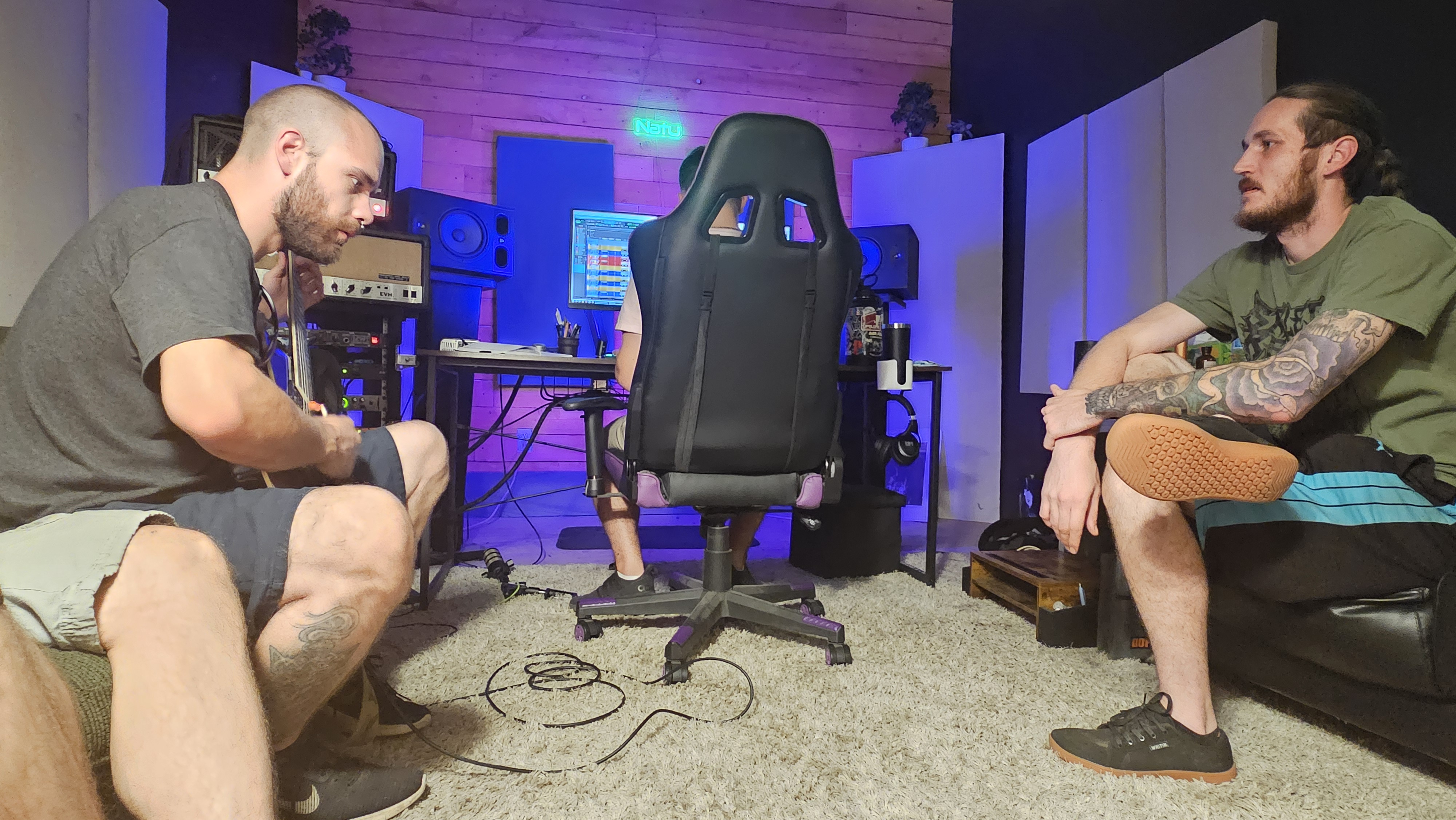
My friends in Dystopioid invited me to sit in on a recording session. The band was recording a track titled “Back Alley Babylon” before their drummer, Gabe Wagner, has to undergo hand surgery, which will force the band into a temporary hiatus. They chose to record now, aware that the momentum might be difficult to regain after Gabe’s recovery.
The session took place in a studio located in an old warehouse in downtown Greeley, Colorado. The building’s worn exterior contrasted sharply with the modern, clean interior, where neon lights illuminated shelves of equipment. It was a far cry from the dingy garages where I’d watched bands play, whether in my youth or even just last week.
Alex Carillo, drummer for Draghoria and founder of Natu Productions, led the session. He began mixing and producing music at just 17, driven by a desire to record his own work without paying someone else to do it. Since 2015, he’s refined his skills. Natu Productions has been an official venture for a little over a year, but in that time, Alex has taken it to the next level, turning it into a full-time endeavor.
Though he’s worked with many bands, it all started with Draghoria, his own band. Now, his production credits include bands like Oros, Violent Testimony, Abysmal Womb, Kaoticus, Ritual of Ascension, and, of course, Dystopioid, among others. Having reviewed several of the albums he’s produced, I was excited to finally get a front-row seat and see the process firsthand.
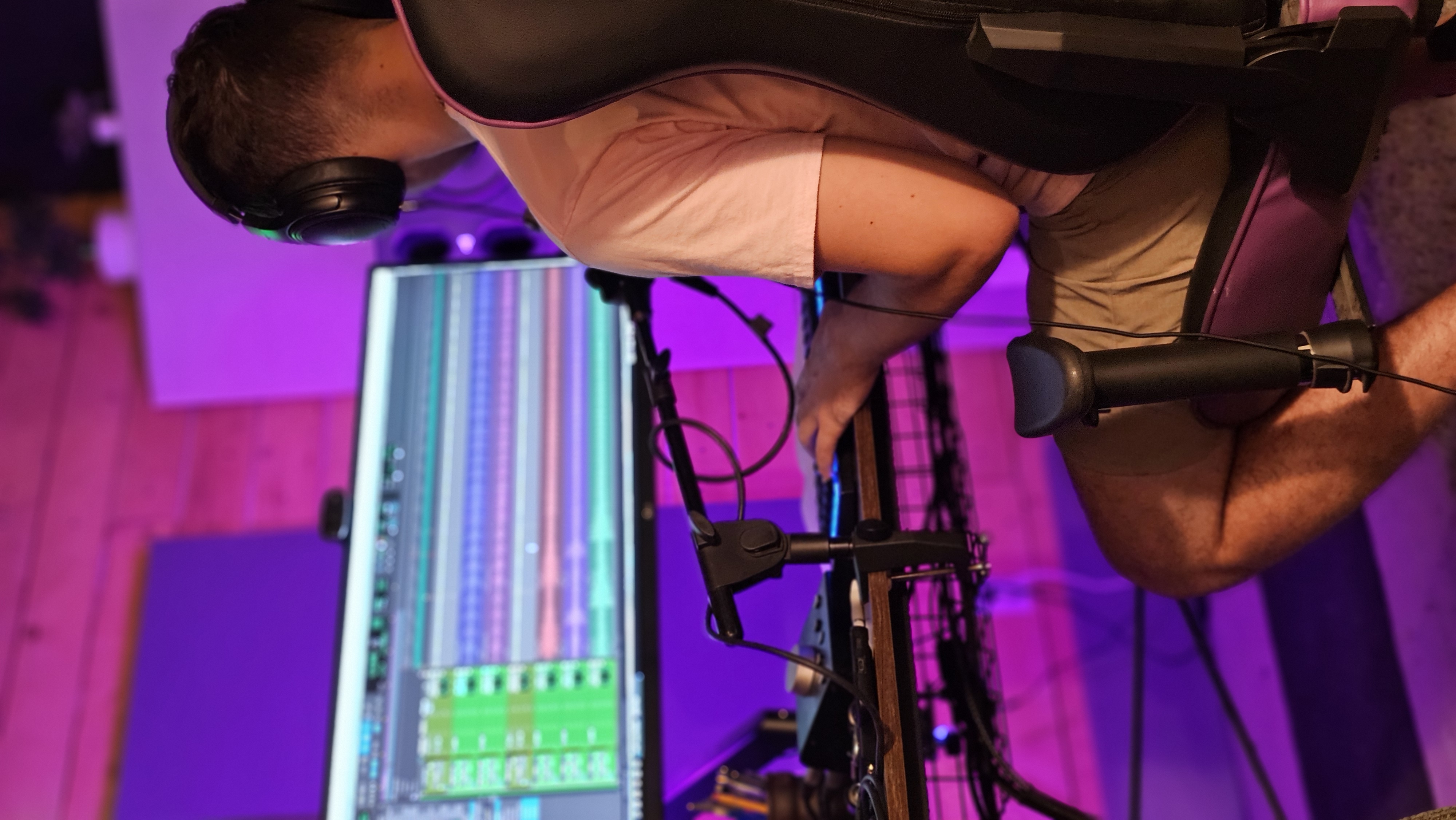
Dystopioid, a thrashy grindcore band from Cheyenne, Wyoming, proudly describes their sound as “wastelandic trash metal.” I arrived just as frontman Billy Rice was finishing his guitar tracks. The band had already spent three hours meticulously working on half of the guitar part for a single song. Once Billy was done, Tylor began laying down his lead guitar parts. The relentless beep of the metronome echoed through the space as we sat on couches, snacked, and listened to him play the same riff over and over and over again. Half the band dozed off. Recording is definitely not the most exciting aspect of making music, but as I sat there, I began to notice the small variations and imperfections in each take. The process really tunes your ear in a way that live performances don’t—isolating the instrument offers a much clearer understanding.
After a few hours, once the guitars were done, it was time to record the drums. Alex’s experience was evident as he guided Gabe through several takes, which Gabe handled with the skill of someone who has been drumming for as long as I’ve known him—some thirty-one years. Watching Alex in action, it was clear that a good producer isn’t just about technical wizardry—they’re a coach, a critic, and a collaborator. Alex embodied all these roles. Despite being the youngest person in the room, he confidently led the session, knowing when to push for another take and when to let the band’s natural imperfections shine through. His goal wasn’t to create a flawless, sterile recording but to capture the core of Dystopioid’s raw and unfiltered sound.
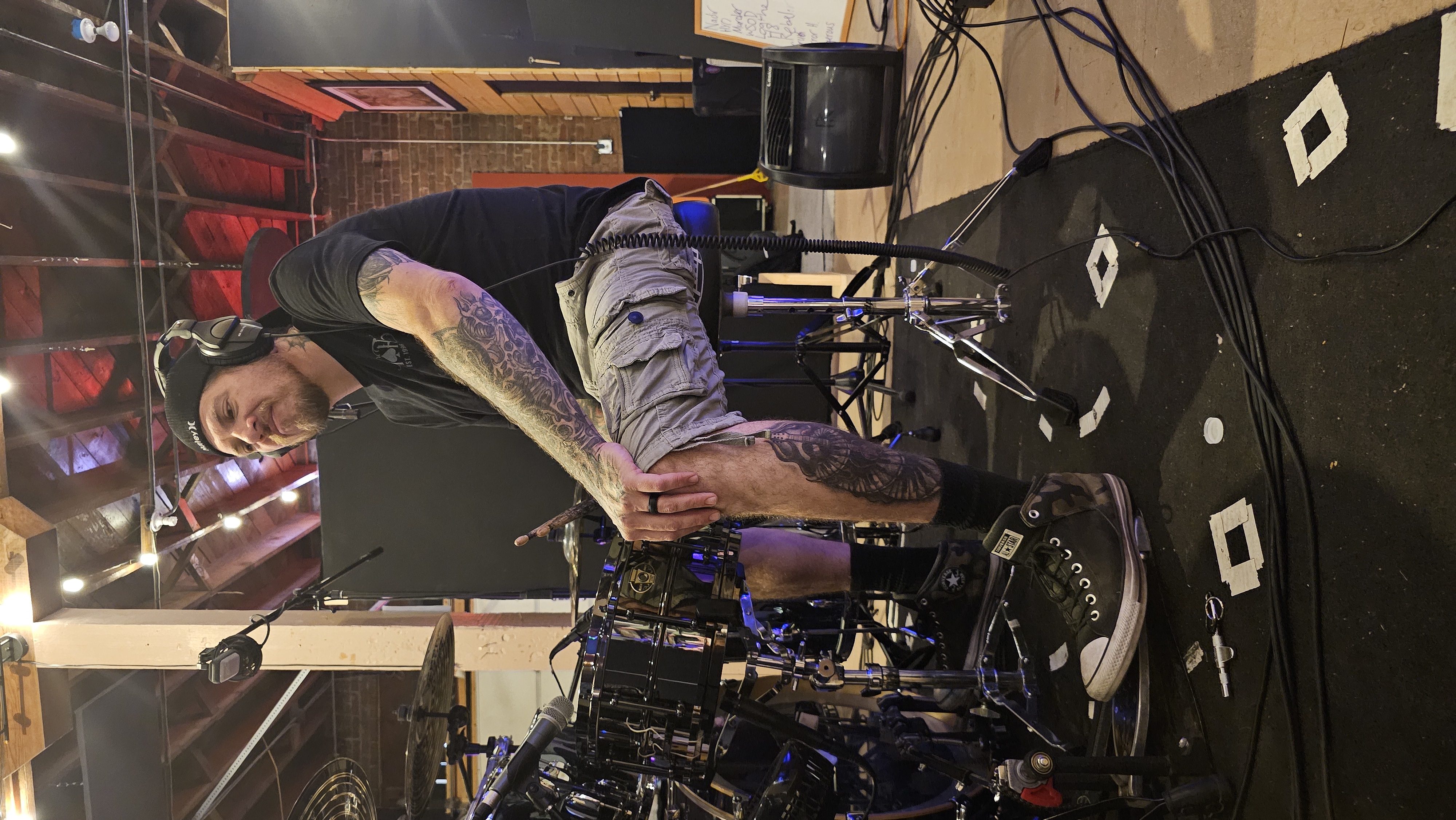
After about five hours in the studio, they were just getting ready to lay down the bass tracks when I had to leave. Still, I walked away with a much deeper understanding of the recording process. It’s meticulous, exhausting work that’s both intense and monotonous, with a lot of napping, snacking, and scrolling through Instagram, contrasted by moments of intense focus. It’s not glamorous, but it’s essential, and seeing it firsthand gave me valuable insight, especially for writing album reviews.
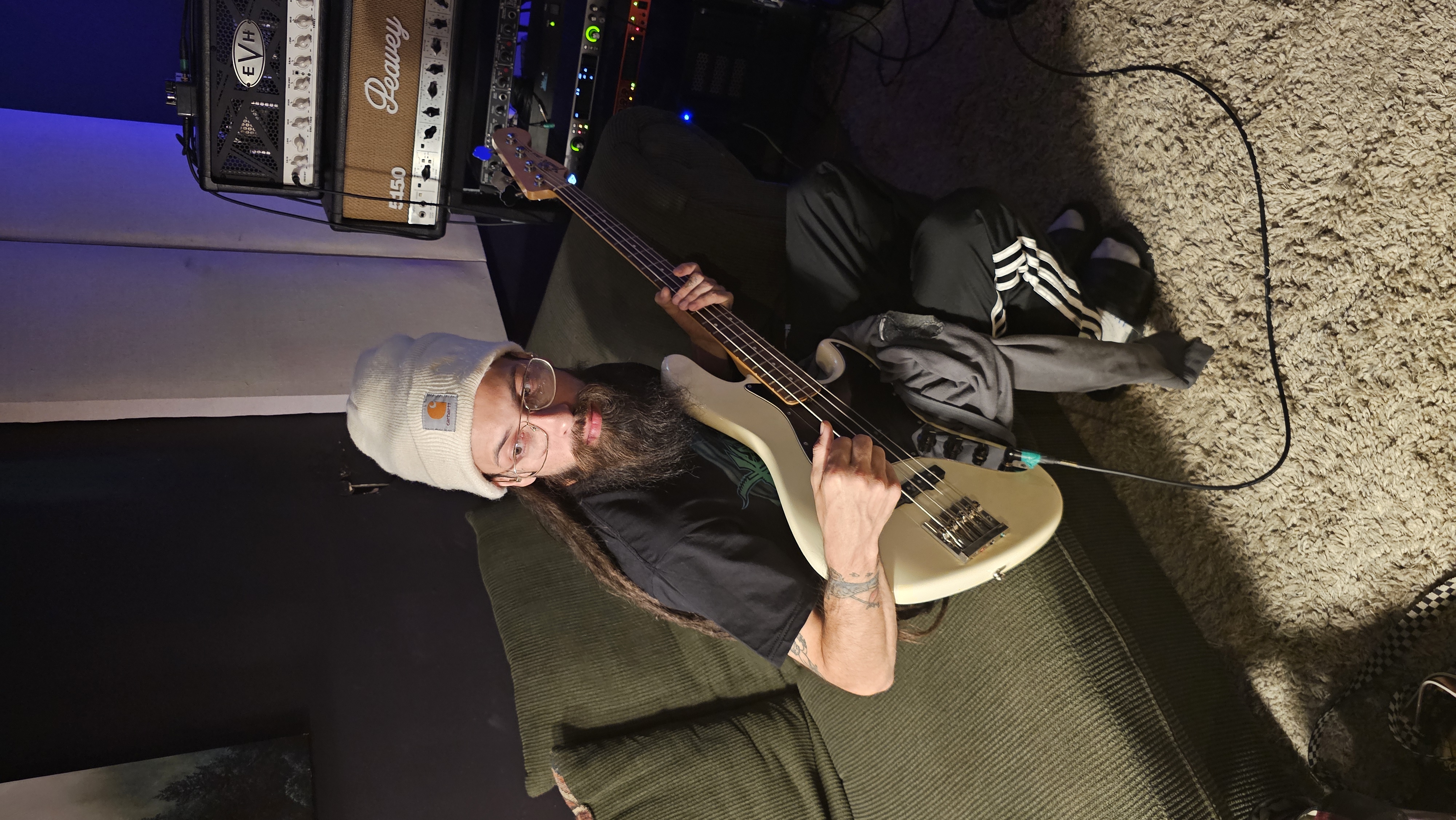
This experience mirrored my own creative process in many ways. Just as recording an album requires patience, attention to detail, repetition, and commitment, so does writing about music. Both processes can be monotonous at times, but they’re also filled with moments of clarity and inspiration that make the effort worthwhile.
Looking back, many key moments in my journey have revolved around the bands Draghoria and Dystopioid. These bands have been central to my growth as a writer, giving me the space to experiment, make mistakes, and find my voice. I’ve learned from them, and in turn, I hope my work has supported them as well.
On stage, in the studio, or behind the scenes, music is a craft that demands dedication. Whether I’m jotting down notes in a dark venue, observing the meticulous work in a recording studio, standing in the crowd dodging elbows, or even being the world’s worst merch girl— I’m grateful to be a part of it.